
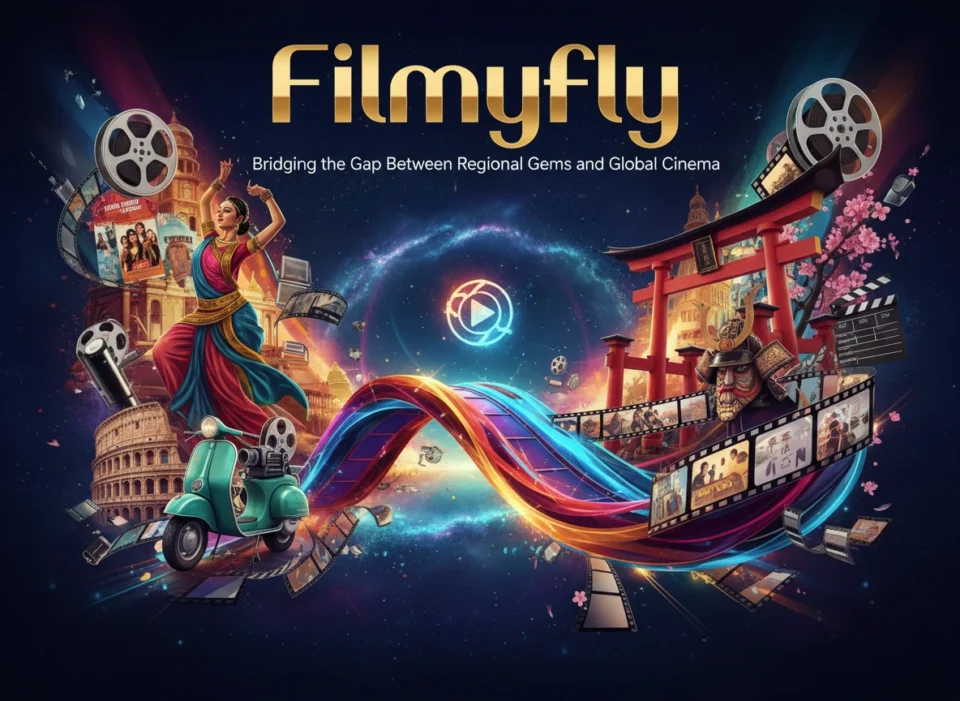
The film industry is vast, but access to it has often been disproportionately skewed toward major Hollywood blockbusters. For decades, incredible stories from regional pockets of India, Southeast Asia, Europe, and South America struggled to find screens, let alone global audiences. This is where platforms like Filmyfly have stepped in to alter the landscape.
Filmyfly has emerged not just as a content aggregator, but as a cultural bridge. By prioritizing accessibility and diversity, it plays a pivotal role in democratizing the movie-watching experience. This article explores how Filmyfly champions regional and international cinema, the impact it has on the global film ecosystem, and why platform neutrality is essential for the future of storytelling.
The Challenge of Content Discovery
Before understanding Filmyfly’s specific role, we must acknowledge the problem it solves. Traditional distribution models favored high-budget productions with massive marketing spend. A poignant drama from Kerala or a gritty thriller from South Korea often failed to secure theatrical releases outside their home territories.
Audiences were hungry for these stories—evidenced by the explosion of interest in “world cinema”—but the infrastructure to deliver them was lacking. Streaming giants helped, yet their libraries often rotate content or focus on producing their own originals. Filmyfly filled this void by creating a repository that treats a regional indie film with the same reverence as a summer blockbuster.
Elevating Regional Cinema Beyond Borders
Regional cinema is the heartbeat of cultural storytelling. It captures the nuances of language, tradition, and local struggles that mainstream national cinema often glosses over. Filmyfly has been instrumental in taking these hyper-local stories global.
Breaking the Language Barrier
One of the most significant barriers to entry for regional cinema is language. Subtitling and dubbing are expensive processes that many small production houses cannot afford for wide distribution. Filmyfly has focused on integrating robust subtitle support and dual-audio options for a vast library of regional content.
By ensuring that a Telugu action thriller or a Marathi social drama is accessible to a Spanish or English-speaking viewer, the platform removes the friction of language. This technical enablement allows the story to take center stage.
The Rise of “Pan-Indian” and “Pan-Global” Content
The term “Pan-Indian” has gained traction recently, describing films that transcend state borders. Filmyfly accelerates this phenomenon. When a film releases on the platform, it isn’t just releasing to a specific region; it is releasing to a digital audience that knows no geography.
For example, the resurgence of South Indian cinema on the global stage isn’t accidental. It is powered by platforms that allow a viewer in the United States or the UK to watch these films simultaneously with domestic releases. Filmyfly’s curation algorithms often suggest regional hits to users who typically watch only mainstream content, subtly broadening their cinematic horizons.
A Window into International Storytelling
While regional cinema focuses on internal diversity, international cinema offers a lens into the wider world. Filmyfly’s catalog extends far beyond the typical Hollywood fare, offering a robust selection of Asian, European, and Latin American cinema.
The Korean Wave and Beyond
The “Hallyu” or Korean Wave is a prime example of how digital availability drives culture. Filmyfly capitalized on this trend early, ensuring a steady stream of K-dramas and Korean thrillers were available to its user base. But it didn’t stop there. The platform has increasingly showcased content from Thailand, Indonesia, and Japan.
This availability does two things:
- It educates the audience: Viewers become accustomed to different storytelling paces and visual styles.
- It creates a market: As demand grows on the platform, distributors see the value in licensing more international content.
European Art House and Indie Gems
European cinema often struggles with the “pretentious” label in mainstream discourse, largely because access is limited to niche art house theaters in big cities. By placing a French New Wave film or a modern Danish psychological thriller just a click away from a popular action movie, Filmyfly democratizes art house cinema. It invites the casual viewer to take a risk on something different without the financial commitment of a movie ticket.
Impact on Filmmakers and the Industry
The existence of platforms like Filmyfly changes the calculus for filmmakers. The “theatrical release or bust” mentality is fading.
Extending the Shelf Life of Films
In a traditional theater run, a small film might survive two weeks before being pushed out by a larger release. On Filmyfly, that film lives on indefinitely. This “long tail” effect is crucial for regional filmmakers. A film might not find its audience in the first month, but positive word-of-mouth can drive viewers to it six months later. This extended shelf life allows films to build cult followings that were previously impossible.
Data-Driven Validation
When users engage with obscure titles on Filmyfly, it generates data. This data proves that there is an audience for niche genres. Filmmakers can use this popularity as leverage when pitching their next projects to investors. If a director can show that their low-budget regional horror film was one of the most-watched items on a platform for a week, they have tangible proof of marketability.
Community Building and Cultural Exchange
Cinema is a communal experience, even when watched individually. Filmyfly fosters a sense of discovery that serves as a form of cultural exchange.
The “Watercooler” Effect
Digital communities often form around content availability. When a specific regional film drops on Filmyfly, online forums and social media light up with discussions. Viewers dissect plot points and share recommendations. This organic marketing is invaluable. It transforms a passive viewing experience into active participation, creating brand ambassadors for regional cinema.
Preserving Cinematic Heritage
Beyond new releases, there is the issue of preservation. Many older regional films are at risk of being lost because physical reels deteriorate and digitalization is costly. By hosting older classics, Filmyfly acts as a digital archive. It ensures that the golden age of Bengali cinema or the classic era of Hong Kong action remains accessible to new generations of film students and enthusiasts.
The Future of Content Curation
As we look forward, the role of platforms like Filmyfly will only become more critical. The sheer volume of content being produced globally is overwhelming. Without effective curation and a commitment to diversity, we risk drowning in a sea of homogenous content.
Algorithmic Diversity
The next frontier is algorithmic responsibility. If an algorithm only recommends what you already like, you fall into a filter bubble. Filmyfly’s approach to showcasing diverse cinema suggests a commitment to breaking these bubbles. By pushing a “Discovery of the Week” from a lesser-known industry, the platform can actively shape taste rather than just reflecting it.
Supporting Independent Creators
Ideally, the future will see Filmyfly and similar platforms working even closer with independent creators, perhaps even moving into the distribution of short films and documentaries—formats that struggle even more than feature films for visibility.
Conclusion
Filmyfly is more than just a destination for entertainment; it is a vital node in the global film distribution network. By championing regional voices and international perspectives, it enriches the cultural diet of its audience. It proves that a good story transcends borders, languages, and budgets.
For the viewer, it offers a passport to the world. For the filmmaker, it offers a lifeline to an audience. As the entertainment industry continues to evolve, the platforms that prioritize diversity and accessibility will be the ones that define the next era of cinema. Filmyfly’s commitment to showcasing the full spectrum of global filmmaking ensures that no matter where a story is born, it has a chance to be seen, heard, and appreciated.
Please visit this website for more info.
