
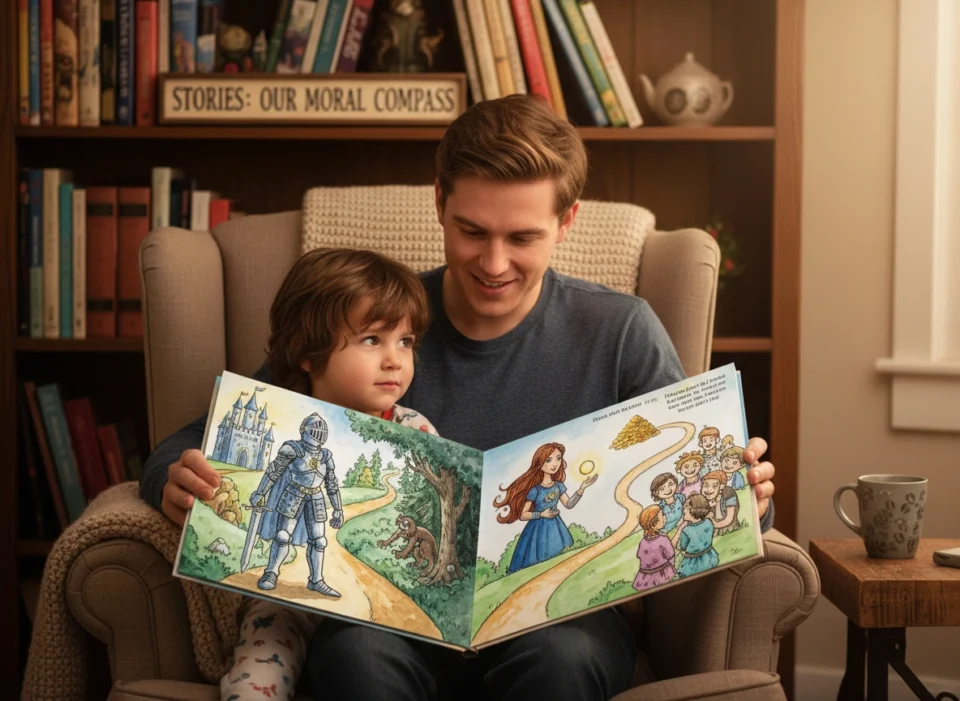
Childhood is a time of immense growth, not just physically, but morally. As children learn to navigate their world, they encounter situations that don’t have clear right or wrong answers. They see a friend cheat on a test, are asked to keep a secret that makes them uncomfortable, or witness someone being treated unfairly. These are moral dilemmas, and guiding children through them is one of the most important responsibilities for parents and educators. Storytelling offers a powerful, accessible, and engaging way to introduce these complex ideas, building a foundation for ethical decision-making that will last a lifetime.
Why Moral Dilemmas are Essential for Development
It can be tempting to present the world to children in simple black-and-white terms. While establishing clear rules about kindness, honesty, and respect is crucial, exclusively focusing on simple dos and don’ts leaves children unprepared for the nuances of real life. Moral dilemmas are situations where two or more moral values or duties conflict, and fulfilling one means violating another.
Introducing children to these complex scenarios in a safe, controlled environment is vital for several reasons:
- Develops Critical Thinking: Moral dilemmas push children beyond simple rule-following. They must analyze situations, consider different perspectives, and weigh potential outcomes. This process hones their ability to think critically and logically about complex problems.
- Fosters Empathy: To understand a dilemma, a child must put themselves in the shoes of the characters involved. They learn to consider the feelings, motivations, and consequences for everyone affected by a decision. This is the very essence of empathy.
- Builds Ethical Reasoning: Engaging with dilemmas helps children construct their own moral framework. Instead of just being told what is right, they begin to understand why certain actions are considered right or wrong, based on principles like fairness, justice, and compassion.
- Prepares Them for Reality: Life is filled with gray areas. By exploring these situations through stories, children gain the confidence and mental tools to face real-world challenges with greater integrity and thoughtfulness.
The Unique Power of Storytelling
Since the dawn of humanity, stories have been our primary method for transmitting values, history, and wisdom. When it comes to teaching complex concepts like morality, storytelling is uniquely effective.
Stories create a safe psychological distance. A child can explore a difficult choice made by a character in a book without feeling the personal pressure or anxiety of facing that choice themselves. This distance allows for open and honest reflection. A story about a character who has to decide whether to tell on a friend for stealing provides a perfect entry point to discuss loyalty, honesty, and consequences without directly accusing or pressuring the child.
Furthermore, narratives are memorable. We are wired to remember stories far better than we remember lists of rules or abstract principles. The emotional journey of a character struggling with a decision sticks with a child, and the lessons learned become embedded in their memory. When they face a similar situation later in life, the story can serve as a mental model, helping them navigate their own choices.
Practical Strategies for Using Stories to Teach Moral Dilemmas
Effectively using stories to teach moral reasoning is more than just reading a book. It involves creating a dialogue and guiding a child’s thinking process. Here are practical steps for parents and educators.
1. Choose the Right Stories
The world of children’s literature is rich with stories that present moral complexities. Look for narratives that don’t offer easy answers.
- For Younger Children (Ages 4-7): At this age, the dilemmas should be simple and relatable.
- Scenario Example: The Empty Pot by Demi. A boy is the only child who fails to grow a flower for the emperor but is rewarded for his honesty.
- Dilemma: Is it better to be dishonest and fit in, or be honest and risk failure?
- Other Examples: Dr. Seuss’s The Lorax (environmental responsibility vs. industrial progress), Lying Up a Storm by Julia Cook (the consequences of telling small lies).
- For Older Children (Ages 8-12): As children mature, they can handle more complex and ambiguous scenarios.
- Scenario Example: Wonder by R.J. Palacio. Characters must constantly choose between being popular and being kind to a classmate with a facial deformity.
- Dilemma: When is it right to stand up for someone, even if it means risking your own social standing?
- Other Examples: Bridge to Terabithia by Katherine Paterson (friendship, grief, and imagination), the Harry Potter series (choosing what is right over what is easy, prejudice, and sacrifice).
You can also create your own simple scenarios. For example: “Imagine you found a wallet on the playground. Your friend says you should keep the money because no one saw you, but you know it belongs to someone else. What do you do?”
2. Read and Pause for Discussion
Don’t wait until the end of the story to talk about it. The most fruitful discussions happen in the moment. When a character faces a tough choice, pause the story and ask open-ended questions.
Avoid questions with a simple “yes” or “no” answer. Instead, use prompts that encourage deeper thinking:
- “What do you think she is feeling right now?”
- “What are the choices he has here?”
- “What might happen if he chooses to do A? What about if he chooses B?”
- “Have you ever felt like you were in a similar situation?”
- “Why do you think his friend is telling him to do that?”
3. Explore Different Perspectives
A key part of understanding a moral dilemma is recognizing that different people can see the same situation differently. Encourage your child to consider the viewpoint of every character involved.
In the scenario of finding a wallet, you might ask:
- “How would the person who lost the wallet feel?”
- “Why do you think your friend wants you to keep the money? Is he thinking about the person who lost it?”
- “How would you feel tomorrow if you kept the money? How would you feel if you returned it?”
This practice strengthens empathy and teaches children that most situations are not one-sided. It moves them away from a purely self-centered view toward a more community-oriented one.
4. Validate Their Thinking, Don’t Just Give the “Right” Answer
When a child offers a solution, resist the urge to immediately correct them if it’s not the “right” one. The goal is not to have them parrot the expected answer but to develop their own reasoning process.
If a child says, “I’d keep the money because I really want that new toy,” don’t scold them. Instead, explore that line of reasoning. “That’s interesting. So you would get the toy you want. How might the person who lost their money feel? What if they needed it to buy food for their family?”
By gently guiding them through the consequences of their proposed action, you help them arrive at a more ethical conclusion on their own. This self-discovery is far more powerful than a lecture. Praise their thought process by saying things like, “I can see you’ve thought a lot about this,” or “That’s a really good point I hadn’t considered.”
5. Connect the Story to Real Life
Draw parallels between the story’s dilemma and situations the child might encounter. You can connect it to their experiences at school, with siblings, or on the sports field. “Remember how the boy in the story had to decide whether to share his prize? It’s a bit like when you have to decide whether to let your little sister play with your new game.”
This connection makes the lesson more tangible and demonstrates that moral reasoning isn’t just a theoretical exercise—it’s a practical skill for everyday life.
Building a Moral Compass, One Story at a Time
Teaching children about moral dilemmas is not about giving them a flawless map to navigate life. It’s about giving them the tools to build their own compass. Stories provide the ideal workshop for this construction. Through character, plot, and conflict, children can explore the complexities of human interaction, experiment with decision-making, and build the empathetic and critical foundations of a strong moral character. By reading together, pausing to ask thoughtful questions, and engaging in open-hearted dialogue, you empower your child to not only know the difference between right and wrong but to navigate the vast, challenging, and important spaces in between.Please click here for more info.
You may also read:High-Protein Diets: Unpacking the Pros, Cons, and the Carnivore Craze
