
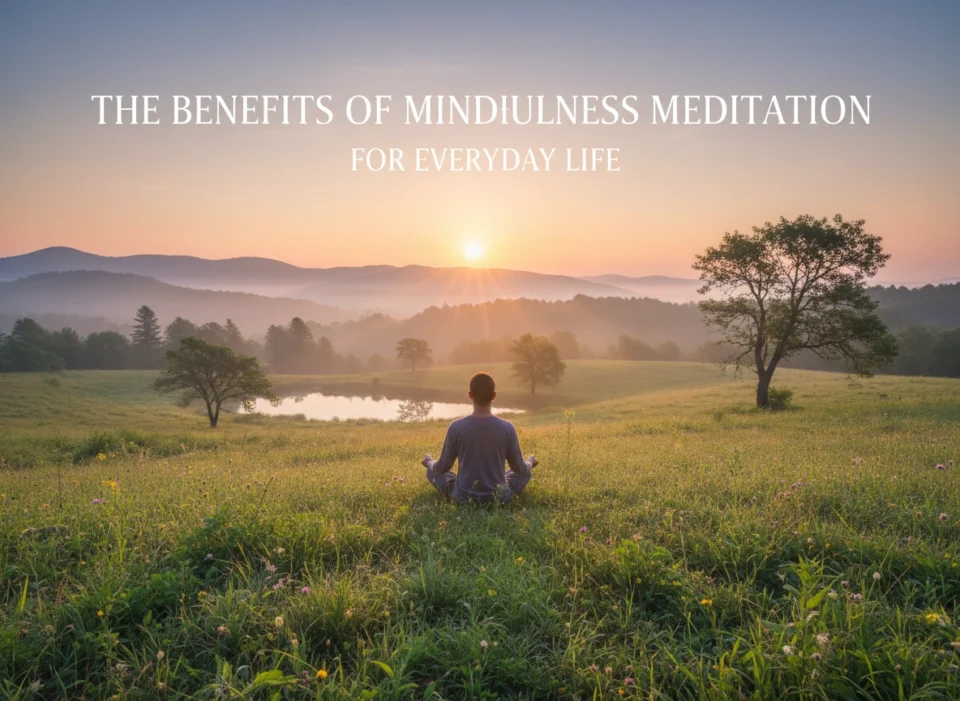
Life moves quickly, often leaving us feeling pulled in countless directions. We juggle work deadlines, family responsibilities, and social commitments, all while being bombarded by a constant stream of information. In this environment, finding a moment of quiet can feel like a luxury. Mindfulness meditation offers a practical and powerful tool to navigate this complexity, providing a way to anchor ourselves in the present moment and cultivate a deeper sense of calm and clarity. This practice isn’t about emptying your mind, but rather about observing your thoughts and feelings without judgment, leading to profound benefits that extend into every aspect of daily life.
This article will explore the transformative advantages of integrating mindfulness meditation into your routine. We will look at how it can significantly reduce stress, enhance your ability to focus, help you manage your emotions, improve your relationships, and boost your overall sense of well-being. By understanding these benefits, you can discover how a few moments of intentional stillness each day can create lasting positive change.
Reduce Stress and Anxiety
One of the most well-documented benefits of mindfulness meditation is its powerful effect on stress reduction. When we experience stress, our bodies release cortisol, the primary stress hormone, triggering our “fight or flight” response. While this is useful in short-term, dangerous situations, chronic stress keeps cortisol levels elevated, which can lead to anxiety, sleep problems, and other health issues.
How Mindfulness Helps
Mindfulness meditation teaches you to observe stressful thoughts and physical sensations without reacting to them. By sitting with these feelings, you create a space between the stimulus (the stressful thought) and your response. This practice helps activate the parasympathetic nervous system, also known as the “rest and digest” system, which counteracts the fight-or-flight response. It lowers your heart rate, reduces blood pressure, and promotes a state of relaxation.
Studies have consistently shown the effectiveness of mindfulness-based stress reduction (MBSR) programs. Research from the University of Massachusetts Medical School, where MBSR was developed, has demonstrated that participants experience significant reductions in symptoms of anxiety and panic. By regularly practicing mindfulness, you train your brain to become less reactive to stressors, allowing you to approach challenging situations with a calmer, more measured perspective.
Improve Focus and Concentration
In a world filled with digital distractions, maintaining focus has become a significant challenge. Our attention is constantly being fragmented by notifications, emails, and the endless scroll of social media. Mindfulness meditation is essentially a workout for your attention muscle, helping you strengthen your ability to concentrate on a single task for an extended period.
Training Your Attention
During meditation, the goal is to gently guide your focus to a single anchor point, such as your breath. When your mind inevitably wanders—and it will—the practice is to notice that it has wandered and gently bring your attention back. This simple act of returning your focus, over and over again, builds a stronger attentional network in your brain.
Neuroscientific studies support this idea. Researchers have used MRI scans to show that regular meditation practice can increase grey matter density in the prefrontal cortex, the area of the brain associated with attention control, planning, and decision-making. In everyday life, this translates to improved concentration at work, better listening skills in conversations, and a greater ability to stay present with the task at hand, increasing both your efficiency and your enjoyment of the activity.
Enhance Emotional Regulation
Strong emotions are a natural part of the human experience. However, when we are not in control of them, they can lead to impulsive actions and regrettable decisions. Mindfulness provides the tools to manage your emotional responses more effectively, fostering a sense of inner balance and stability.
Observing Emotions Without Judgment
Mindfulness teaches you to recognize and acknowledge your emotions as they arise, without getting swept away by them. Instead of identifying with the emotion (e.g., “I am angry”), you learn to observe it as a temporary state (e.g., “I am feeling anger”). This subtle shift in perspective creates the necessary space to choose how you want to respond rather than reacting automatically.
By practicing this non-judgmental observation, you become more familiar with your emotional patterns. You start to understand what triggers certain feelings and how they manifest in your body. This heightened self-awareness is the first step toward emotional regulation. Over time, you can learn to sit with uncomfortable feelings like sadness or frustration without needing to immediately suppress or act on them, leading to greater emotional resilience and maturity.
Build Better Relationships
The benefits of mindfulness naturally extend to our interactions with others. When you are more present, less stressed, and more emotionally balanced, you are better equipped to connect with people in a meaningful way. Mindfulness cultivates qualities like empathy, compassion, and patience, which are the cornerstones of healthy relationships.
The Power of Presence
How often have you been in a conversation while simultaneously thinking about your to-do list or what you’ll say next? Mindfulness practice trains you to be fully present with the person in front of you. This means truly listening, not just to their words but to their tone and body language. When people feel heard and seen, it deepens trust and strengthens the connection.
Furthermore, by developing a non-judgmental awareness of your own thoughts and feelings, you become more capable of offering that same acceptance to others. You are less likely to react defensively in disagreements and more likely to respond with compassion and understanding. This ability to navigate conflicts constructively and communicate with empathy can transform your relationships with your partner, family, friends, and colleagues.
Improve Overall Well-being
Ultimately, the cumulative effect of these benefits is a significant improvement in your overall quality of life. Mindfulness meditation can lead to better sleep, a stronger immune system, and a more positive outlook.
By calming the nervous system and reducing anxiety, mindfulness makes it easier to fall asleep and stay asleep. Many people who struggle with insomnia find relief through a simple pre-bedtime meditation practice. Physically, the reduction in chronic stress has a positive impact on the body, with some studies suggesting it can lower inflammation and bolster the immune system.
Mentally, mindfulness encourages a shift away from negative thought patterns and rumination. It fosters gratitude for the present moment and helps you appreciate the small joys of everyday life. This cultivation of a more positive mindset contributes to a lasting sense of contentment and well-being.
How to Start Your Mindfulness Practice
Incorporating mindfulness into your daily routine doesn’t need to be complicated. You can begin with just a few minutes each day.
Find a quiet place where you won’t be disturbed. Sit in a comfortable position, either on a chair with your feet flat on the floor or on a cushion on the ground. Close your eyes and bring your attention to the sensation of your breath. Notice the feeling of the air entering your nostrils, filling your lungs, and then leaving your body.
Your mind will wander. When it does, simply notice where it went without criticism, and gently guide your focus back to your breath. That’s the entire practice. Start with five minutes a day and gradually increase the duration as you feel comfortable. You can also use guided meditation apps to help you begin.
The benefits of mindfulness meditation are not abstract concepts; they are tangible changes that can enhance your daily existence. By committing to this simple practice, you are investing in your mental, emotional, and physical health, paving the way for a more focused, peaceful, and fulfilling life.Visit here to explore more details.
You may also read: The Silent Crisis: Air Pollution’s Toll on Our Planet
