
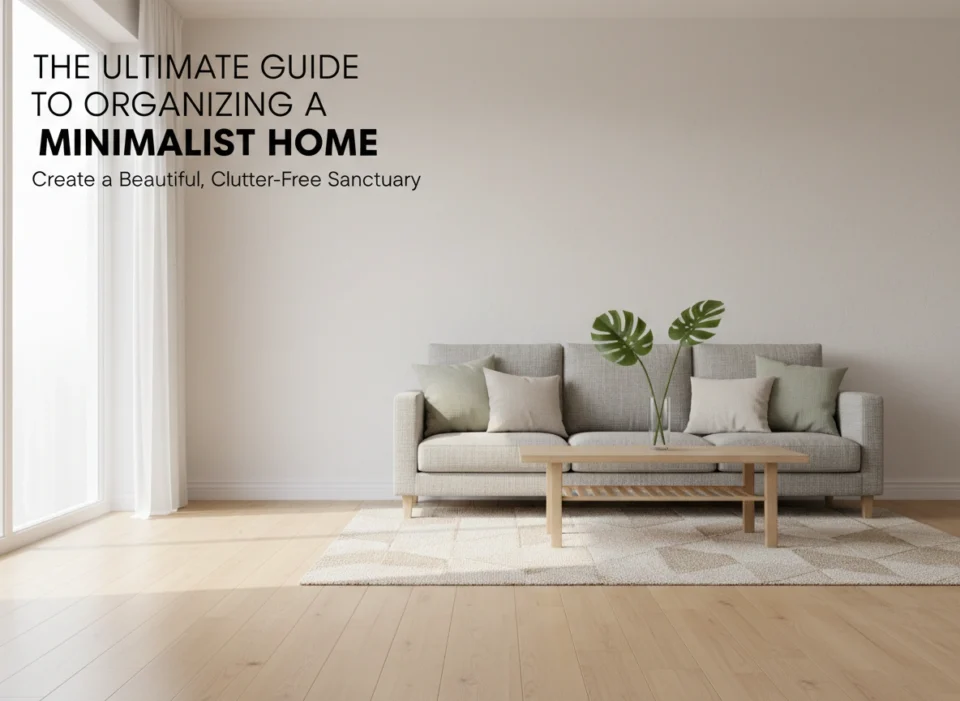
Living with less might seem like a challenge, but the rewards of a minimalist home are immense. Imagine a space where everything has a purpose, cleaning is a breeze, and your mind feels as clear as your countertops. Minimalism isn’t about stark, empty rooms; it’s about intentional living. It’s about surrounding yourself only with things that add value to your life, freeing you from the weight of physical and mental clutter.
This guide will walk you through the entire process of transforming your home into a functional, serene, and organized space. We will explore the core principles of minimalism, provide a step-by-step decluttering plan, and offer practical strategies to maintain your newly simplified lifestyle for the long term.
What is Minimalism and Why Embrace It?
At its core, minimalism is the intentional promotion of the things we most value and the removal of everything that distracts us from them. It’s a lifestyle choice that extends beyond home decor, influencing finances, relationships, and personal well-being. When applied to your home, it means curating your possessions rather than accumulating them.
The benefits of adopting this approach are compelling:
- Reduced Stress: A cluttered environment can contribute to feelings of stress and anxiety. A clean, organized space promotes calmness and mental clarity. Studies have shown a link between high concentrations of stress hormones and women who perceive their homes as cluttered.
- More Time and Freedom: With fewer possessions, you spend less time cleaning, organizing, and searching for lost items. This frees up valuable time for hobbies, family, or simply relaxing.
- Financial Savings: A minimalist mindset discourages impulse buys and focuses on quality over quantity. You’ll naturally spend less on unnecessary items, allowing you to save money or invest in experiences.
- Increased Focus and Productivity: Visual clutter competes for your attention. By removing these distractions, you can improve your focus and be more productive, whether you’re working from home or pursuing a personal project.
Your Step-by-Step Decluttering Plan
The journey to a minimalist home begins with a single, crucial step: decluttering. This process can feel overwhelming, so breaking it down into manageable actions is key.
Set Your Vision and Goals
Before you touch a single item, define what you want to achieve. What is your “why”? Do you want a home that’s easier to clean? A space that feels more peaceful? Write down your goals and keep them visible. This vision will serve as your motivation when you feel stuck or sentimental.
Start Small
Don’t try to tackle your entire house in one weekend. This is a marathon, not a sprint. Choose a small, contained area to start with, like a single drawer in your kitchen, your nightstand, or the medicine cabinet. A quick win will build momentum and confidence.
The Four-Box Method
This is a classic and effective decluttering technique. As you go through your items, sort them into four distinct categories:
- Keep: These are items you love, use regularly, or hold significant sentimental value. Be honest with yourself. If you haven’t used it in a year, do you really need to keep it?
- Donate/Sell: These are items in good condition that you no longer need but someone else could use.
- Trash/Recycle: This box is for items that are broken, expired, or no longer usable.
- Relocate: These are items that don’t belong in the area you’re currently organizing. Place them in this box to be put away in their proper homes later. This prevents you from getting sidetracked.
Ask the Right Questions
As you handle each item, ask yourself a series of critical questions to determine its fate:
- Do I use this regularly?
- Does this item bring me joy or add value to my life?
- If I were shopping right now, would I buy this?
- Do I own another item that serves the same purpose?
- Am I keeping this out of guilt or obligation?
Your answers will guide you toward making intentional decisions about what stays and what goes.
Room-by-Room Organization Strategies
Once the initial decluttering is done, the next phase is organizing what remains. The goal is to create a system where every item has a designated home.
The Living Room: A Space for Relaxation
The living room should be a sanctuary for rest and connection.
- Surfaces: Keep coffee tables and side tables clear of clutter. Use a decorative tray to corral essentials like remotes and coasters.
- Media: Digitize your CDs, DVDs, and photos to reduce physical media. A single streaming device can replace dozens of cases.
- Decor: Be selective with decorative items. Choose a few meaningful pieces of art or decor that you truly love, rather than filling every surface. A healthy plant can add life without adding clutter.
The Kitchen: The Heart of Functionality
A minimalist kitchen is an efficient one.
- Countertops: Keep countertops as clear as possible. Store small appliances you don’t use daily inside cabinets. Use a utensil crock for everyday tools.
- Pantry: Decant dry goods like pasta, rice, and flour into clear, uniform containers. This not only looks tidy but also helps you see what you have at a glance, preventing duplicate purchases.
- Cabinets and Drawers: Group like items together. All baking supplies go in one area, all pots and pans in another. Use drawer dividers to keep utensils and gadgets organized.
The Bedroom: Your Personal Retreat
Your bedroom should be the most peaceful room in the house.
- Wardrobe: Apply the “one in, one out” rule. For every new piece of clothing you buy, donate or sell an old one. Consider a capsule wardrobe to simplify your choices and keep your closet streamlined.
- Nightstand: Limit your nightstand to the bare essentials: a lamp, a book, and perhaps a glass of water. Use a drawer for hand cream, chargers, and other small items.
- Surfaces: Resist the urge to use the top of your dresser or a chair as a dumping ground for clothes. Make it a habit to put clothes away immediately.
The Bathroom: Simplify Your Routines
Bathrooms can quickly become cluttered with half-empty bottles and expired products.
- Products: Go through your cosmetics, toiletries, and medications. Discard anything that is expired or that you haven’t used in the last six months.
- Storage: Use drawer organizers or small bins to categorize items under the sink. Keep only daily-use products on the counter or in the medicine cabinet.
- Linens: How many towels do you really need? A good rule of thumb is two bath towels, two hand towels, and two washcloths per person, plus a set for guests.
Maintaining a Minimalist Lifestyle
Decluttering is an event, but minimalism is a lifestyle. The real work begins after the initial purge. Here’s how to maintain your organized home.
- Mindful Consumption: Before making any new purchase, pause and think. Ask yourself if you truly need the item and if it aligns with your minimalist values. Avoid impulse buys and shopping for entertainment.
- The “One In, One Out” Rule: This simple principle is one of the most effective ways to prevent clutter from creeping back in. When you bring a new item into your home, an old one must leave.
- Regular Tidying Sessions: Schedule short, frequent tidying sessions. Spending 15 minutes each evening putting things back in their place is far less daunting than a multi-hour cleaning marathon on the weekend.
- Embrace Digital: Transition to paperless billing, digitize important documents, and use digital calendars and to-do lists to reduce paper clutter.
Overcoming Common Challenges
The path to minimalism isn’t always smooth. It’s normal to face a few hurdles along the way.
- Sentimental Items: It’s difficult to part with items tied to memories. You don’t have to get rid of everything. Choose a few of the most important pieces to display and consider taking photos of the rest. You can create a digital album of these items to preserve the memory without the physical clutter.
- Dealing with Gifts: You may receive gifts that don’t fit your minimalist aesthetic. It’s important to graciously accept the gift and the sentiment behind it. Afterward, you are not obligated to keep it forever. You can choose to donate it or pass it along to someone who will appreciate it more.
- Family and Roommates: Living with others who don’t share your minimalist goals can be tricky. Focus on your personal belongings and shared spaces. Lead by example rather than by force. Your tidy habits may inspire them, but it’s crucial to respect their belongings and their space.
Adopting a minimalist approach to your home is a transformative journey. It’s about creating space—not just physical space, but mental and emotional space as well. By decluttering, organizing with intention, and embracing mindful consumption, you can build a home that is a true reflection of the life you want to live: one that is simple, meaningful, and beautifully organized.Check out this site to find useful information.
You may also read: The Benefits of Mindfulness Meditation for Everyday Life
