
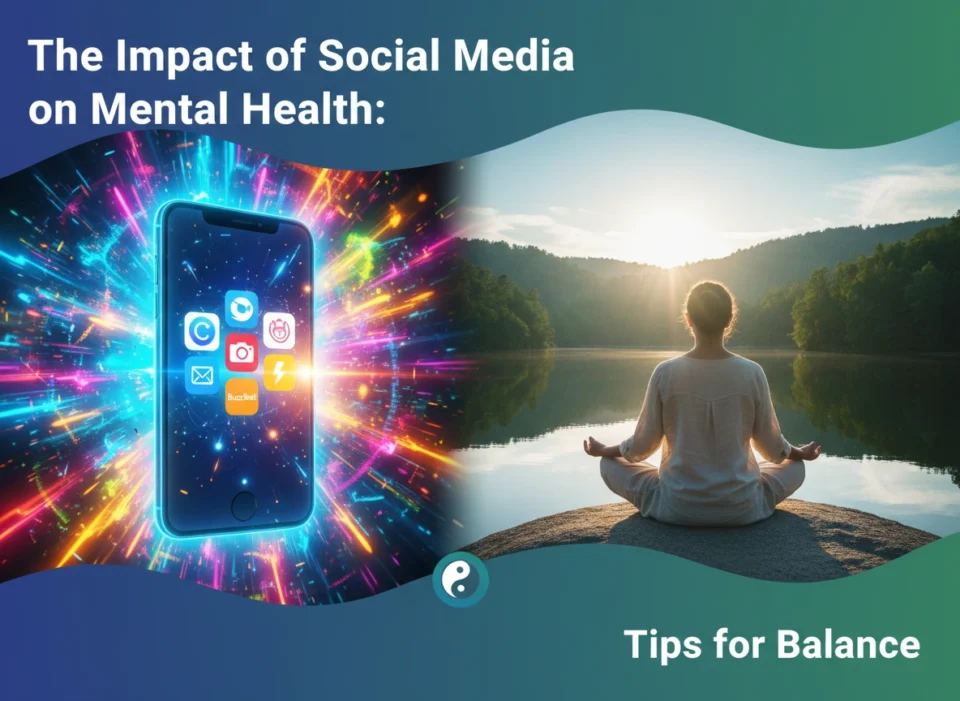
We scroll while we wait for coffee. We refresh our feeds before we fall asleep. We check our notifications the moment we wake up. For billions of people, social media isn’t just a tool; it is a permanent backdrop to daily life. While these platforms promised to bring us closer together, the reality of their impact on our psychological well-being is far more complex.
Social media acts as a double-edged sword. It can be a lifeline for connection and community, but it also harbors the potential to distort our self-image and disrupt our mental peace. Understanding this dynamic is crucial for anyone looking to reclaim their attention and protect their mental health.
This article explores the nuanced relationship between our screens and our minds. We will examine the psychological impacts of constant connectivity and provide actionable strategies to help you build a healthier, more balanced relationship with your digital life.
The Dual Nature of Digital Connection
To discuss social media honestly, we must acknowledge that it isn’t inherently evil. It has fundamentally changed how we relate to one another, often in profound and positive ways.
Building Community and Reducing Isolation
For marginalized groups or individuals living in remote areas, social media is a vital bridge. It allows people to find their “tribe”—communities that share niche interests, struggles, or identities that might not exist in their immediate physical environment. Research has shown that for young adults, particularly those in the LGBTQ+ community, online spaces provide critical emotional support and validation that reduces feelings of isolation.
Raising Awareness and Destigmatizing Mental Health
Platforms like Instagram, TikTok, and X (formerly Twitter) have played a massive role in normalizing conversations about mental health. Influencers and professionals alike use these spaces to share educational content about anxiety, depression, and therapy. This democratization of information has empowered millions to seek help and recognize that they are not alone in their struggles.
The darker Side of the Feed
However, the benefits often come with a steep psychological cost. The design of these platforms—optimized for engagement and retention—often triggers psychological mechanisms that can lead to distress.
The Comparison Trap
One of the most pervasive issues is the “highlight reel” effect. We constantly compare our unfiltered, behind-the-scenes reality with everyone else’s curated best moments. A study from the University of Pennsylvania found a direct causal link between limiting social media use and reductions in loneliness and depression. The researchers noted that viewing others’ carefully edited lives fosters a sense of inadequacy.
When you see a friend’s promotion, a celebrity’s vacation, or an influencer’s perfect morning routine, your brain often engages in social comparison. This can lead to:
- Lower self-esteem: Feeling like you aren’t achieving enough or looking good enough.
- FOMO (Fear Of Missing Out): A pervasive anxiety that others are having more fun or living better lives than you are.
Cyberbullying and Online Harassment
The anonymity of the internet can embolden negative behavior. Cyberbullying remains a significant risk, particularly for teenagers and young adults. The constant accessibility of social media means that harassment can follow victims home, leaving no safe space for retreat. The psychological toll includes increased rates of anxiety, depression, and in severe cases, suicidal ideation.
Disrupted Sleep Patterns
The blue light emitted by screens suppresses melatonin, the hormone responsible for sleep. Beyond the biology, the psychological engagement of social media keeps our brains alert. “Doomscrolling”—the act of endlessly consuming negative news—can trigger the body’s stress response, making it physically difficult to relax and drift off. Chronic sleep deprivation is closely linked to worsening mental health symptoms.
The Psychology of the “Like”
Why is it so hard to look away? Social media platforms are engineered to be addictive. They utilize variable reward schedules, similar to slot machines. You never know if the next swipe will bring a funny video, an interesting news story, or a notification that someone liked your post.
This uncertainty triggers a release of dopamine in the brain. Over time, we become conditioned to seek these micro-doses of validation. When the validation doesn’t come—or when we receive negative feedback—our mood can plummet. Relying on external digital metrics for self-worth is a precarious foundation for mental stability.
Warning Signs of Digital Burnout
How do you know if your social media habits are becoming problematic? It’s rarely a sudden crash; rather, it’s a slow erosion of well-being. Look out for these indicators:
- Mindless Scrolling: You pick up your phone without a purpose and lose huge chunks of time.
- Emotional Reactivity: You feel irritable, anxious, or sad immediately after using social media.
- Neglected Responsibilities: Your screen time is interfering with work, school, or face-to-face relationships.
- Physical Symptoms: You experience eye strain, headaches, or sleep disturbances related to phone use.
- Phantom Vibrations: You feel anxious when you cannot check your phone or mistakenly think it buzzed.
Practical Tips for Digital Balance
Achieving balance doesn’t necessarily mean deleting every app and moving to a cabin in the woods. It means shifting from being a passive consumer to an active, intentional user. Here are practical strategies to regain control.
1. Curate Your Feed Ruthlessly
Your feed is your digital environment. Just as you wouldn’t want to live in a messy, toxic house, you shouldn’t inhabit a toxic digital space.
- Unfollow or Mute: If an account makes you feel inadequate, angry, or anxious, unfollow them. This applies to friends, celebrities, and news outlets.
- Follow “Feel-Good” Content: Fill your feed with accounts that inspire, educate, or make you laugh. Follow artists, nature photographers, or therapists who offer grounding advice.
- Use the Algorithm: Engage with content that makes you feel good. The algorithm will learn to show you more of it.
2. Set Hard Boundaries
Willpower is a finite resource. Don’t rely on it. Use structural barriers to limit your usage.
- No-Phone Zones: Designate the bedroom and the dining table as phone-free zones. Buy an old-fashioned alarm clock so you don’t need your phone by your bed.
- App Limits: Use the built-in “Screen Time” (iOS) or “Digital Wellbeing” (Android) features to set daily time limits for specific apps.
- Turn Off Notifications: Disable non-essential notifications. You do not need to know instantly that a stranger liked your photo. Check your apps on your terms, not when they summon you.
3. Practice Mindful Usage
Mindfulness is about intention. Before you unlock your phone, pause and ask yourself: Why am I doing this?
- The “Why” Check: Are you bored? Lonely? Anxious? Procrastinating? If you are lonely, text a friend instead of scrolling. If you are bored, read a book.
- Exit Strategy: Decide how long you will stay online before you open the app. “I will check Instagram for five minutes while the kettle boils.”
4. Schedule Digital Detoxes
Give your brain a reset. This could be a “Tech-Free Sunday” or just one hour every evening before bed. Use this time to engage in analog activities that ground you in the physical world, such as cooking, walking, reading physical books, or crafting. These activities provide a different, more sustained type of dopamine release that is healthier for your brain.
5. Prioritize Real-World Connection
Social media should supplement your social life, not replace it. Make a conscious effort to see people face-to-face. The nuances of human interaction—eye contact, tone of voice, physical touch—trigger oxytocin release, which fosters bonding and reduces stress. These biological benefits are largely lost in digital communication.
Moving Forward: Intentionality is Key
The impact of social media on mental health is not predetermined. It is defined by how we use it. We are the first generation to navigate this always-on landscape, and we are still learning the rules of the road.
You have the power to curate your experience. By recognizing the mechanisms that keep you hooked and implementing boundaries, you can transform social media from a source of stress into a tool for inspiration and connection.
Remember, your mental health is more important than your follower count. It is okay to log off, step back, and live a life that looks good on the inside, not just on the screen.Please visit website for more info.
You may also read: How to Choose the Perfect Name for Your New Puppy
