

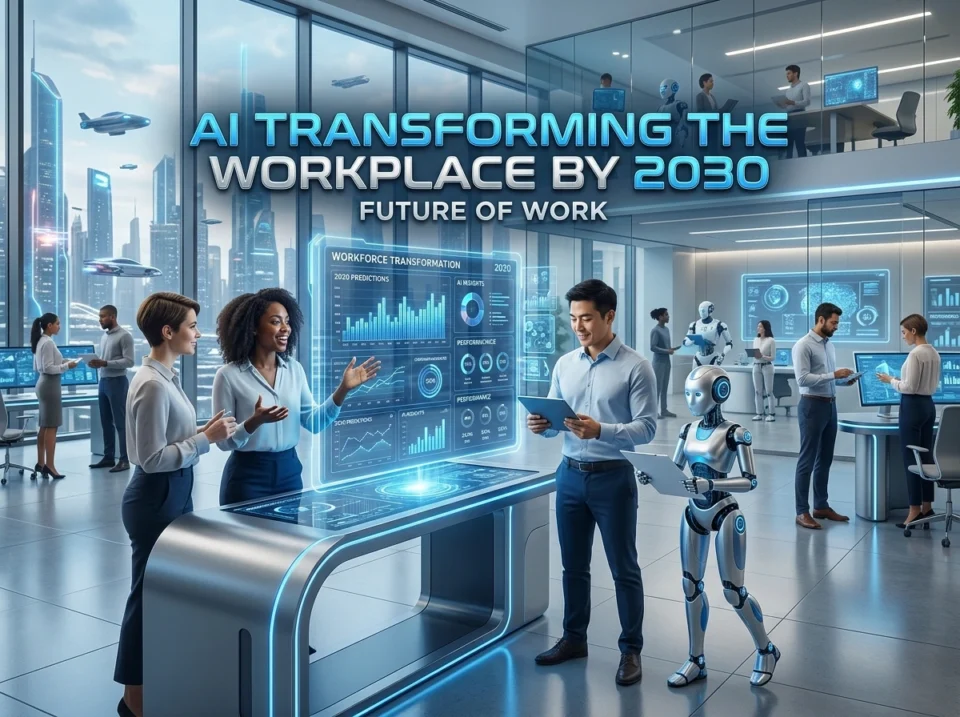
Work is already changing faster than most of us can track. Emails write themselves, meeting notes summarize automatically, and software now spots patterns that used to take analysts days to find. By 2030, these shifts will feel less like helpful add-ons and more like the foundation of how business gets done.
The team at tech ehla believes we are standing at a turning point. Artificial intelligence won’t just make existing jobs faster. It will redraw the boundaries of what work even means. In this article, you’ll learn how automation, job roles, decision-making, and skills will evolve, and what all of it means for the workforce and society at large.
AI-Driven Workplace Automation Is Just Getting Started
Automation isn’t new. Factories have used machines for decades. What’s different now is that AI can handle tasks that once demanded human judgment.
From Repetitive Tasks to Cognitive Work
Early automation replaced physical, repetitive labor. Today’s AI takes on cognitive work: sorting documents, answering customer questions, drafting reports, and flagging errors in financial records.
By 2030, expect AI to manage entire workflows with minimal oversight. A single tool might schedule a project, assign resources, monitor progress, and alert managers only when something needs a human decision.
The key reason this matters: businesses will free up thousands of hours currently spent on routine work. That time can shift toward strategy, creativity, and relationship-building.
A Realistic Example
Picture a mid-sized logistics company. Today, staff manually track shipments, update spreadsheets, and call customers about delays. With AI, the system predicts delays before they happen, notifies customers automatically, and reroutes deliveries in real time.
The result isn’t fewer people doing the same jobs. It’s the same people doing higher-value work.
Try this: List three repetitive tasks your team does weekly. Ask whether an AI tool could handle even part of them today.
The Evolution of Job Roles
A common fear is that AI will erase jobs. The more accurate picture is that AI will reshape them.
Jobs Won’t Disappear—They’ll Shift
History supports this. When spreadsheets arrived, accountants didn’t vanish. Their role moved from manual calculation to analysis and advice. AI will follow a similar path.
By 2030, many roles will blend human skills with AI support. A marketer won’t just write copy; they’ll guide AI tools, review outputs, and focus on brand strategy. A doctor won’t be replaced but supported by systems that scan images and suggest diagnoses.
New Roles Will Emerge
New technology always creates new jobs. Expect growth in positions like:
- AI trainers who teach systems to perform specific tasks accurately
- Prompt and workflow designers who build efficient human-AI processes
- AI ethics officers who ensure fair and responsible use
- Data quality specialists who keep the information feeding AI clean and reliable
The workers who thrive will be those who learn to partner with AI rather than compete against it.
AI in Decision-Making and Productivity
One of the biggest changes ahead is how businesses make decisions. AI turns raw data into clear, timely insights.
Faster, Sharper Decisions
Leaders often make choices with incomplete information. AI narrows that gap. It analyzes market trends, customer behavior, and internal performance in seconds.
By 2030, decision-making will lean heavily on AI-generated forecasts. A retailer might adjust prices hourly based on demand. A manufacturer could predict equipment failures before they cause downtime.
The advantage isn’t just speed. It’s consistency. AI applies the same logic every time, reducing costly human errors and bias in routine calls.
Productivity Gains That Compound
Productivity won’t rise in a single leap. It will compound as AI handles more of the workload.
Consider these gains:
- Meetings shortened by automated summaries and action items
- Research completed in minutes instead of hours
- Reports drafted instantly, ready for human review
Quick checklist: To boost productivity with AI, focus on tasks that are repetitive, data-heavy, and time-consuming first.
When This Won’t Work
AI isn’t magic. It struggles with situations that lack good data, require deep empathy, or involve rare, one-off decisions. Trusting it blindly in these cases can backfire.
Smart companies will treat AI as a powerful assistant, not an infallible authority. Human judgment stays essential for nuance, ethics, and creativity.
Future Skills Workers Will Need
If AI handles more tasks, what should people focus on? The answer shapes careers for the next decade.
Skills That Rise in Value
As AI takes over routine work, uniquely human skills grow more important:
- Critical thinking: knowing which AI outputs to trust and which to question
- Creativity: generating ideas that machines can’t originate
- Emotional intelligence: leading teams and building client trust
- Adaptability: learning new tools quickly as they emerge
Technical Fluency Without Coding
You won’t need to be a programmer. But you will need comfort working alongside AI tools. This means understanding what AI can do, how to guide it, and how to check its work.
Think of it like learning to drive. You don’t need to build the engine, but you do need to steer confidently.
The Habit of Lifelong Learning
The half-life of skills is shrinking. What’s cutting-edge today may be standard in three years. Workers who commit to continuous learning will stay valuable, while those who resist change risk falling behind.
Try this: Pick one AI tool relevant to your field and spend 30 minutes this week experimenting with it.
The Broader Societal Impact of AI by 2030
AI’s influence reaches beyond the office. It will touch how we structure work, share prosperity, and address fairness.
Reshaping the Structure of Work
Remote and hybrid work already changed where we work. AI will change how we work together across time zones and languages. Real-time translation, automated coordination, and smart scheduling will make global teams feel local.
We may also see a rise in flexible, project-based work as AI handles the administrative glue that once required full-time staff.
The Question of Fair Access
Not everyone will benefit equally. Companies with resources will adopt AI faster, and workers with training will gain the most. This creates a real risk of widening gaps.
Addressing this will require investment in education, reskilling programs, and thoughtful policy. Businesses that help their people adapt won’t just do good—they’ll build loyalty and stronger teams.
Trust, Ethics, and Responsibility
As AI makes more decisions, questions of fairness and accountability grow louder. Who’s responsible when an AI system makes a mistake? How do we prevent bias in hiring or lending tools?
By 2030, expect clearer rules and higher expectations around responsible AI. Organizations that build trust through transparency will earn a lasting edge.
Preparing for the Shift Now
The changes ahead are big, but they don’t have to be overwhelming. The best time to prepare is before the transformation peaks.
Start small. Identify one process AI could improve. Train your team on a single tool. Encourage curiosity rather than fear. These early steps build the confidence and skills that pay off later.
Companies that wait for a “perfect moment” will find themselves catching up. Those that act now will shape their own future instead of reacting to it.
Conclusion
By 2030, AI won’t simply speed up the work we already do. It will change the nature of jobs, sharpen decision-making, and reward a new mix of human skills. Automation will handle the routine, while people focus on creativity, judgment, and connection.
The message from tech ehla is clear: this shift is an opportunity, not a threat—for those who prepare. Start today by learning one AI tool, rethinking one workflow, and building a habit of continuous learning. The future of work is being written now, and you can help write your part of it.
