
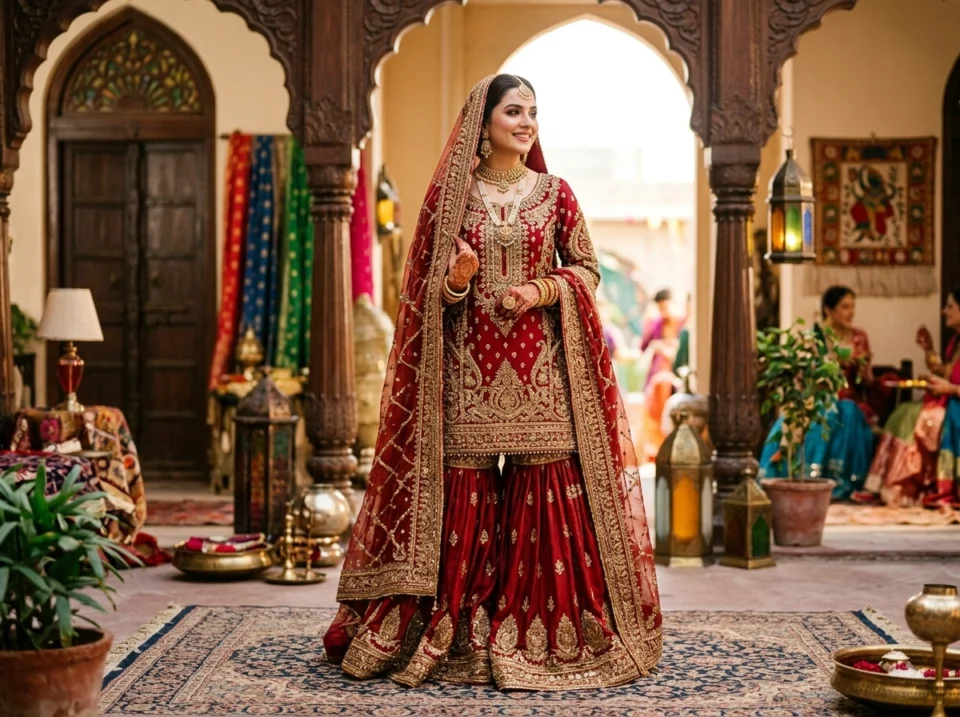
Few garments carry the weight of history quite like the sharara. With its flowing, flared silhouette and intricate detailing, this iconic outfit has graced royal courts, joyous weddings, and modern runways alike. The sharara is more than a beautiful piece of clothing. It tells a story of empires, artistry, and the enduring connection between fashion and identity across South Asia and beyond.
For anyone curious about the roots of traditional ethnic wear, the journey of the sharara offers a fascinating glimpse into centuries of cultural exchange. Let’s explore where this remarkable garment came from, how it evolved, and why it continues to captivate people around the world today.
What Is a Sharara?
At its core, a sharara is a pair of wide-legged, heavily flared trousers worn with a short or medium-length tunic, often called a kurta or kameez. A flowing scarf, known as a dupatta, usually completes the look. The lower portion of the trousers flares dramatically below the knee, creating a graceful, skirt-like movement when the wearer walks.
The garment is typically crafted from luxurious fabrics like silk, brocade, georgette, and chiffon. Artisans adorn it with rich embellishments, including zardozi embroidery, sequins, mirror work, and delicate threadwork. The result is an outfit that feels both regal and celebratory.
Mughal-Era Origins
The story of the sharara begins in the grandeur of the Mughal Empire, which ruled much of the Indian subcontinent from the 16th to the 19th centuries. During this golden age of art and culture, the royal courts of cities like Delhi, Lucknow, and Hyderabad became centers of refined fashion.
Noblewomen and members of the royal family favored elaborate garments that reflected their status. The sharara emerged as a symbol of elegance and prosperity among the aristocracy. Skilled craftspeople spent months hand-embroidering each piece with gold and silver threads, often using techniques that have been passed down through generations.
The city of Lucknow, in particular, played a major role in shaping the garment’s identity. Known for its courtly traditions and exquisite craftsmanship, Lucknow gave rise to the refined embroidery styles that still define premium sharara designs today. The Awadhi culture of the region celebrated grace, poetry, and beauty, and the sharara fit perfectly into this world of artistic expression.
Evolution Through South Asian History
As the Mughal Empire declined, the sharara did not fade away. Instead, it spread beyond royal circles and became part of the broader cultural fabric of the region. Over time, the garment adapted to changing tastes, regional preferences, and new generations of wearers.
During the 19th and 20th centuries, the sharara remained a staple for special occasions, especially among Muslim communities in present-day India and Pakistan. It was commonly worn at weddings, religious festivals, and family gatherings. Mothers passed treasured sharara sets down to their daughters, turning the garment into a cherished family heirloom.
The mid-20th century brought new influences. As film industries in the region grew, actresses appeared on screen in stunning sharara ensembles, sparking trends that everyday women eagerly followed. This connection between cinema and fashion helped keep the garment relevant through decades of changing styles.
Cultural Significance in Weddings and Festive Occasions
The sharara holds a special place in celebrations across South Asia. For many families, no wedding feels complete without it. Brides, bridesmaids, and guests alike often choose the garment to honor tradition while looking their absolute best.
Weddings
In wedding ceremonies, the sharara symbolizes joy, prosperity, and respect for cultural roots. Bridal versions feature the most luxurious fabrics and the most intricate embroidery, sometimes taking artisans weeks or months to complete. The flared silhouette adds drama and movement, making the wearer feel like royalty on one of the most important days of her life.
Festivals and Religious Celebrations
Beyond weddings, the sharara shines during festive occasions such as Eid, Diwali, and other cultural celebrations. Families dress in their finest attire to mark these moments, and the sharara offers a perfect blend of comfort, beauty, and tradition. Its versatility allows wearers to dress it up with heavy jewelry or keep it relatively understated for daytime gatherings.
This deep cultural connection explains why a well-made sharara dress remains a treasured purchase for so many people preparing for life’s most meaningful events.
Regional Variations
One of the most fascinating aspects of the sharara is how it changes from region to region. While the basic structure stays consistent, local traditions and tastes have produced distinct styles.
Pakistani Sharara
In Pakistan, the sharara is a beloved part of festive and bridal wear. Pakistani designs often feature bold colors, rich brocade fabrics, and elaborate embellishments. Wedding sharara sets in particular tend to be opulent, with heavy embroidery and luxurious finishes. The garment is a frequent choice for Eid celebrations and family functions across the country.
Indian Sharara
In India, the sharara enjoys widespread popularity, especially in northern regions with strong Mughal heritage. Indian versions range from heavily embellished bridal pieces to lighter, more contemporary designs suited for casual celebrations. The garment often appears alongside other traditional outfits at multi-day Indian weddings, where guests change ensembles for each event.
Other Regional Styles
Communities across the broader South Asian diaspora have also embraced the sharara, adding their own touches. From subtle color palettes to fusion silhouettes, these variations show how a single garment can adapt to countless cultural contexts while keeping its essential character intact.
The Modern-Day Revival in Global Fashion
After a period when Western-influenced styles dominated, the sharara has experienced a powerful comeback. Today, it stands at the intersection of tradition and modern design, appealing to a new generation that values heritage and individuality.
Designer Reinventions
Contemporary fashion designers have reimagined the sharara for the modern wardrobe. They experiment with shorter tunics, unexpected color combinations, and lightweight fabrics that make the garment easier to wear. Some pair sharara pants with crop tops or structured jackets, creating fusion looks that feel fresh while honoring the original silhouette.
Global Appeal
The garment’s reach now extends far beyond South Asia. In the United States and other diverse communities, the sharara has found enthusiastic fans among people who appreciate its craftsmanship and cultural depth. South Asian Americans wear it proudly at weddings and cultural events, while fashion lovers from all backgrounds admire its striking design.
The Role of Social Media and E-Commerce
Digital platforms have played a huge part in this revival. Social media gives designers and wearers a stage to showcase their creations, while online stores make it easier than ever to find authentic, high-quality pieces. A buyer in any state can now browse hundreds of designs, compare styles, and order a custom sharara delivered straight to their door. This blend of tradition and technology has opened the garment to a truly global audience.
Why the Sharara Endures
The lasting appeal of the sharara comes down to a rare combination of qualities. It carries deep historical meaning, connecting wearers to centuries of artistry and tradition. It offers stunning visual beauty, with silhouettes and embellishments that command attention. And it remains remarkably adaptable, evolving with each generation while staying true to its roots.
For families across the South Asian diaspora, the garment represents more than fashion. It honors ancestors, celebrates milestones, and keeps cultural identity alive in an increasingly connected world. Each time someone slips into a sharara for a wedding or festival, they participate in a living tradition that spans hundreds of years.
Conclusion
From the opulent courts of the Mughal Empire to the runways and online boutiques of today, the sharara has traveled an extraordinary path. It has survived the rise and fall of empires, adapted to changing tastes, and earned a place in the hearts of people across the globe.
Its enduring popularity proves that great design never truly goes out of style. Whether worn by a bride on her wedding day or a young woman celebrating a festival with family, the sharara continues to embody grace, heritage, and joy. As it finds new admirers around the world, this timeless garment reminds us that the most beautiful traditions are the ones we carry forward, one celebration at a time.
