

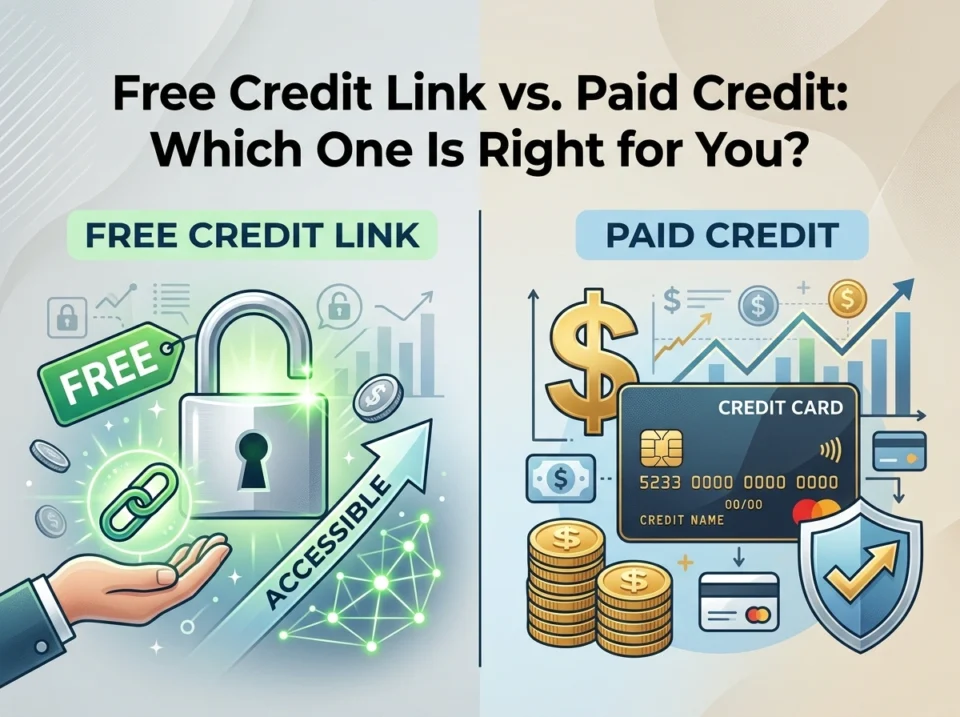
Choosing between a free credit link and a paid credit option can feel like comparing apples to oranges. Both promise access to credit, both have loyal fans, and both come with strings attached. Yet picking the wrong one can cost you money, time, or even peace of mind.
The good news? You don’t need to be a finance expert to make a smart choice. You just need to understand how each option works and which one fits your goals.
In this guide, you’ll learn the real differences between free credit links and paid credit—covering cost, accessibility, risks, rewards, and the situations where each one shines. By the end, you’ll know exactly which path makes sense for your wallet and your lifestyle.
What Is a Free Credit Link?
A free credit link gives you access to credit-related services, offers, or resources at no upfront charge. Think of it as a no-cost gateway to credit perks, promotions, or tools that would normally require payment.
These links often connect users to special promotions, bonus offers, or platforms that let you explore credit benefits without committing your own funds first. They’re popular because they lower the barrier to entry—anyone can try them out.
If you’re curious about how this works in practice, you can explore a free credit link to see the kind of access and offers available.
Key Features of Free Credit Links
- No upfront cost to access the offer or service
- Quick sign-up with minimal requirements
- Promotional bonuses that reward new users
- Low commitment, so you can test before you invest
The takeaway: free credit links remove the financial risk of getting started, making them ideal for first-timers and cautious users.
What Is Paid Credit?
Paid credit is exactly what it sounds like—you pay to access higher limits, premium features, or enhanced rewards. This could mean a paid membership, a deposit-based account, or a service that charges a fee for greater benefits.
Unlike free options, paid credit usually offers more power and flexibility. You’re trading money for better terms, faster access, or exclusive perks that free users can’t reach.
Key Features of Paid Credit
- Higher credit limits and expanded access
- Premium rewards like cashback or loyalty points
- Priority support and faster service
- More control over terms and conditions
The takeaway: paid credit suits people who want serious benefits and are willing to invest to unlock them.
Cost: Free Savings vs. Paid Value
The most obvious difference is cost—and it’s where many people make their decision too quickly.
Free credit links cost nothing upfront. That’s a huge win if you’re budget-conscious or simply want to explore your options. You keep your cash and still get access to useful offers.
Paid credit, on the other hand, requires an investment. But here’s the key: that investment often pays off through stronger rewards and better terms. A small fee might unlock cashback worth far more than what you paid.
Quick comparison:
- Free credit link — zero cost, lower rewards, great for testing
- Paid credit — upfront fee, higher rewards, better for active users
The main difference is that free saves money now, while paid can earn money over time. Choose based on how much you plan to use the service.
Accessibility: Who Can Get In?
Accessibility decides how easy it is to start using each option.
Free credit links win on simplicity. Most require just an email or a quick form. There’s no credit check hurdle or large deposit, so almost anyone can jump in. This makes them perfect for students, newcomers, or people rebuilding their finances.
Paid credit often has stricter entry rules. You may need to meet income requirements, pass a verification step, or commit to a recurring fee. While this limits access, it also means you’re joining a more structured, reliable system.
Who Should Choose Each Option?
- Free credit link: beginners, casual users, anyone testing the waters
- Paid credit: established users, frequent spenders, those needing higher limits
Here’s the key: if you value easy access with no barriers, free wins. If you want a robust system and can meet the requirements, paid delivers.
Risks: What You Need to Watch For
Every credit option carries some risk, and knowing them protects you from surprises.
Risks with free credit links:
- Lower limits that may not cover bigger needs
- Limited features compared to paid versions
- Offers that may change or expire quickly
Risks with paid credit:
- Ongoing fees that add up over time
- Penalties if you miss payments or cancel late
- Overspending temptation due to higher limits
The smart move is to read the terms carefully before committing to either. Free links carry less financial risk, but paid options demand more discipline.
Rewards: Where’s the Real Payoff?
Rewards are where the two options really separate.
Free credit links offer modest perks—welcome bonuses, basic access, or limited-time deals. These are nice for a quick boost but rarely build long-term value.
Paid credit shines here. Premium tiers often include cashback, travel points, exclusive discounts, and loyalty rewards that grow the more you use them. For active users, these rewards can far outweigh the cost.
Example scenario: Imagine two shoppers. The first uses a free credit link and grabs a $10 welcome bonus. The second pays a $50 annual fee but earns $200 in cashback over the year. The paid user comes out ahead—but only because they used the service consistently.
The takeaway: rewards favor paid credit for heavy users, while free links suit those who want simple, occasional perks.
Use Cases: Matching the Option to Your Life
Let’s make this practical. Here’s when each option makes the most sense.
When a Free Credit Link Is Right for You
- You’re new to credit and want to learn the ropes
- You prefer zero financial commitment
- You only need occasional access or small perks
- You want to test a platform before paying
When Paid Credit Is Right for You
- You use credit services regularly
- You want premium rewards and higher limits
- You can comfortably afford the fees
- You value priority support and added features
The main difference comes down to frequency and goals. Light users thrive with free options, while committed users get more from paid plans.
Free Credit Link vs. Paid Credit: Quick Verdict
Still on the fence? Here’s a simple way to decide:
- Choose a free credit link if you want low-risk, no-cost access and you’re just getting started.
- Choose paid credit if you want bigger rewards, higher limits, and you’ll use the service often enough to justify the cost.
Neither option is “better” overall—the right choice depends entirely on your habits and budget.
Conclusion: Make the Choice That Fits You
The free credit link versus paid credit debate doesn’t have a one-size-fits-all answer. Free links give you risk-free access and quick perks, making them perfect for beginners and casual users. Paid credit unlocks stronger rewards and more power, rewarding those who use it consistently.
Your next step is simple. Look at how often you’ll use the service and how much you’re willing to invest. If you’re unsure, start with a free option to test the waters—you can always upgrade later.
Ready to explore your options? Compare a free credit link today, weigh it against paid plans, and pick the one that truly fits your financial goals.
