

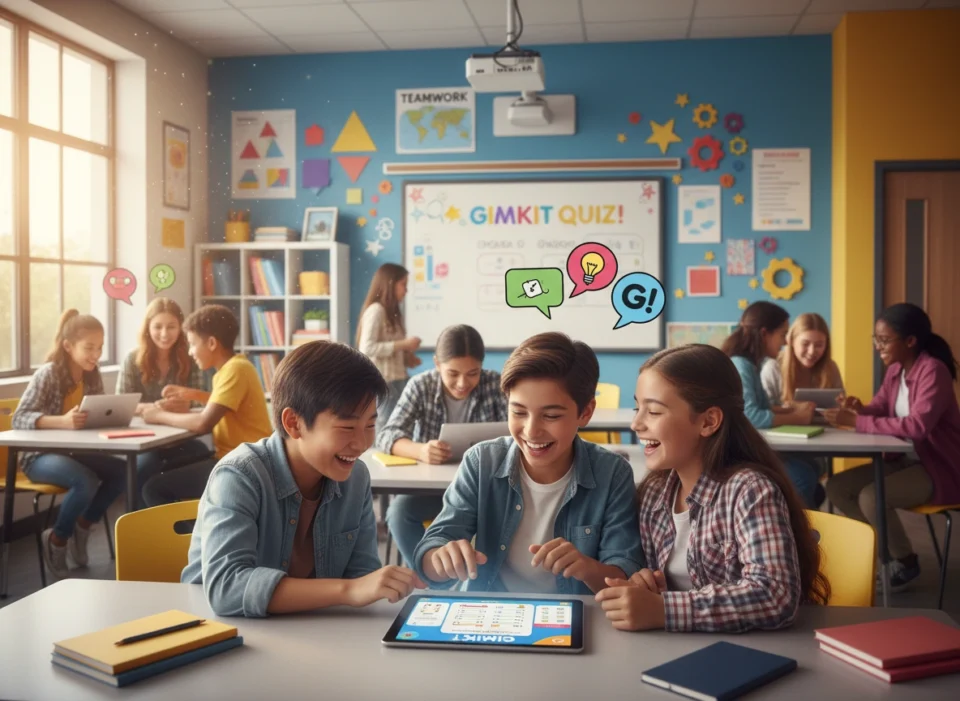
In the modern educational landscape, the emphasis on developing 21st-century skills has never been more critical. Among these, collaboration and teamwork stand out as essential competencies for future success in both academic and professional environments. Educators are continually seeking innovative tools that can transform the traditional classroom into a dynamic space for interactive learning. Gimkit, a game show-style learning platform, has emerged as a powerful ally in this mission. It moves beyond simple quiz formats by integrating game mechanics that inherently promote student cooperation, communication, and shared problem-solving. This article explores the specific features of Gimkit that encourage collaboration and teamwork, offering practical examples for implementation and discussing the profound benefits of this approach.
The Foundation of Collaborative Learning in Gimkit
At its core, Gimkit was designed by a student for students, with an intuitive understanding of what makes learning engaging. While individual play is an option, the platform truly shines in its team-based modes. Unlike many educational games where students compete against each other for individual glory, Gimkit’s collaborative modes shift the focus from personal achievement to collective success. This fundamental design choice is the cornerstone of its effectiveness as a tool for fostering teamwork. When students are grouped into teams, their individual contributions directly impact the team’s overall progress, creating a sense of shared responsibility and mutual dependence. The goal is no longer just to answer questions correctly, but to work together to achieve a common objective, whether that’s earning the most in-game currency, capturing a flag, or completing a mission. This shift in perspective is crucial for developing a collaborative mindset.
Key Features That Drive Teamwork
Gimkit is packed with features specifically engineered to make students work together. These elements transform a simple review session into an exciting, collaborative challenge.
Team Mode: The Heart of Collaboration
The most direct way Gimkit fosters teamwork is through its classic Team Mode. In this setting, the class is divided into two or more teams, and students answer questions to earn in-game money for their group. The collective earnings of all team members contribute to a single team total. This simple structure immediately encourages students to support one another. A student who is struggling can still contribute, and their teammates are motivated to help them understand the material so the entire team can benefit. The live leaderboard, which displays team totals rather than individual scores, reinforces this collective identity. Students cheer for their team’s progress, not just their own, creating a vibrant and supportive classroom atmosphere.
Strategic Gameplay and Shared Goals
Gimkit’s gameplay is not just about answering questions; it involves strategy. Students use the money they earn to purchase power-ups and upgrades, which can either boost their own earning potential or affect other teams. In team modes, these strategic decisions become a point of collaboration. Students must communicate to decide on the best course of action. Should they pool their resources to buy a powerful upgrade that multiplies their earnings? Or should they invest in a power-up that temporarily freezes an opponent’s screen? These discussions require negotiation, critical thinking, and consensus-building. For example, a teacher might observe a team huddling to decide whether to save for the “Streak Bonus” upgrade or to spend their money on smaller, incremental improvements. This process mirrors real-world project management, where teams must allocate resources and make strategic choices to achieve their goals.
Interactive Modes like “Humans vs. Zombies”
Gimkit regularly introduces creative and engaging game modes that build upon its collaborative foundation. A prime example is “Humans vs. Zombies.” In this mode, students are divided into two factions. Humans answer questions to earn resources and build barriers, while Zombies try to tag Humans. The objective is survival and teamwork. Humans must communicate to protect weaker members and strategically build their defenses. Zombies must coordinate their efforts to break through the human lines. This mode transforms the classroom into a dynamic field of play where strategy and constant communication are essential for success. Students learn to rely on each other, protect their teammates, and work in concert to outmaneuver the opposition, all while reinforcing academic content.
“The Floor is Lava” and Shared Survival
Another compelling team-based mode is “The Floor is Lava.” Here, all students are on one large team, and the goal is to survive as long as possible as the “lava” rises. Students answer questions to earn funds, which they can use to collectively build platforms to stay above the rising tide. If even one student falls into the lava, the entire class loses. This creates a powerful sense of unity and shared fate. Students who are quick to answer questions correctly are motivated to help their peers who might be struggling, as everyone’s survival depends on it. This mode is a brilliant exercise in empathy and mutual support, demonstrating that the team is only as strong as its weakest link. Teachers can use this mode to highlight the importance of inclusivity and peer-to-peer assistance in a high-stakes, yet fun, environment.
Practical Implementation in the Classroom
Incorporating Gimkit to foster teamwork is straightforward and can be adapted for any subject or grade level. Here are some practical ways teachers can leverage the platform:
- Structured Team Roles: Before starting a team game, a teacher can assign roles within each group. For instance, one student could be the “Strategist,” responsible for leading discussions on which upgrades to buy. Another could be the “Fact-Checker,” tasked with helping teammates who are unsure about an answer. A third could be the “Communicator,” responsible for announcing the team’s strategy to the group. This adds a layer of formal structure to the collaboration and ensures that all students participate.
- Post-Game Reflection: After a Gimkit session, facilitate a brief discussion about the teamwork aspect. Ask questions like: “What strategies did your team use to succeed?” “What was challenging about working together?” “How did you help a teammate who was stuck?” This metacognitive reflection helps students recognize and articulate the collaborative skills they were using, reinforcing their importance.
- Cross-Curricular Projects: Use Gimkit as a collaborative component of a larger project. For example, after a research project in history, students can create their own “Kit” with questions based on their findings. They can then play in teams to review the collective knowledge of the class. This not only reinforces the content but also makes the review process an engaging and social activity.
The Lasting Benefits of Collaborative Learning
The use of tools like Gimkit to promote teamwork extends far beyond a single lesson. The benefits of collaborative learning are well-documented and have a lasting impact on student development. When students work together, they develop crucial social and emotional skills, such as communication, empathy, and conflict resolution. They learn to value diverse perspectives and build on each other’s ideas. This process enhances their understanding of the academic material, as they must explain concepts to their peers and engage in discussions that deepen their knowledge.
Furthermore, collaborative experiences in the classroom prepare students for the realities of the modern workforce, where teamwork is a fundamental requirement. By engaging in low-stakes, high-energy collaborative games, students build a foundation of skills that will serve them throughout their lives. They learn that collective intelligence can often solve problems more effectively than individual effort, a lesson that is invaluable in any field.
Conclusion
Gimkit offers far more than a simple digital replacement for flashcards. Its thoughtful design and engaging game mechanics provide a rich environment for fostering genuine collaboration and teamwork in the classroom. Through features like Team Mode, strategic power-ups, and inventive game formats such as “Humans vs. Zombies” and “The Floor is Lava,” Gimkit successfully shifts the focus from individual competition to collective achievement. By encouraging communication, shared strategy, and mutual support, it helps students develop the essential 21st-century skills they need to succeed. For educators looking to create a more dynamic, interactive, and collaborative learning environment, Gimkit proves to be an invaluable and effective tool, transforming academic review into an exciting adventure in teamwork.
Please visit this website for more info.
