
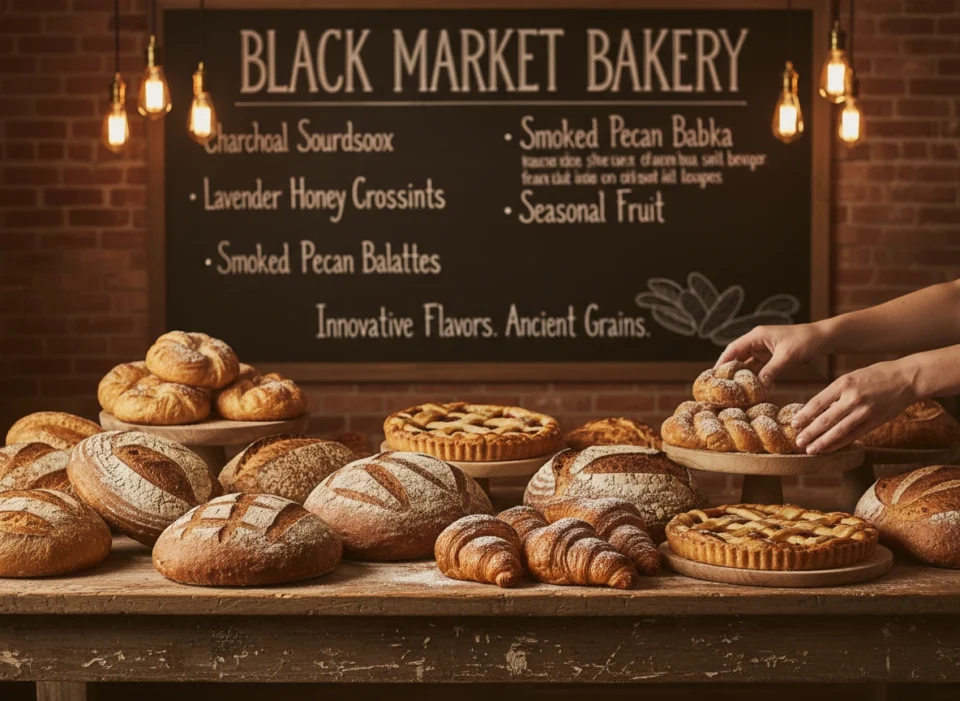
The smell of freshly baked bread, the crackle of a perfectly crisp croissant, and the sight of handcrafted pastries have become more than just breakfast staples. They represent a movement. Across the country, consumers are turning away from mass-produced, shelf-stable loaves in favor of something real. The artisan bakery sector is booming, driven by a desire for authenticity, transparency, and superior taste. Yet, in a market that is becoming increasingly crowded with sourdough starters and laminated doughs, simply being “artisan” is no longer enough.
This article explores the driving forces behind the artisan bakery renaissance and examines how one specific brand, Black Market Bakery, has carved out a unique identity. By rejecting pretension and embracing a “sweet rebellion,” Black Market Bakery offers a powerful case study in how to stand out in a competitive landscape.
The Return to Honest Baking
To understand the current landscape, we must first look at what we left behind. For decades, efficiency and shelf-life dictated the baking industry. Bread became a vehicle for preservatives, bleached flour, and standardization. It was white, soft, and virtually flavorless.
However, a shift has occurred over the last twenty years. Consumers have become more educated about ingredients and sourcing. The “Farm to Table” movement naturally extended to “Grain to Oven.” People began craving bread that required time—fermentation, proofing, and skilled handling.
Why Consumers Are Choosing Artisan
Several key factors are fueling this shift:
- Health and Digestibility: Many consumers find that long-fermentation sourdoughs are easier to digest than commercial yeasted breads. The breakdown of gluten during fermentation appeals to health-conscious buyers.
- Transparency: Shoppers want to know what is in their food. Artisan bakeries typically use simple lists: flour, water, salt, yeast. There are no unpronounceable additives.
- Experience and Connection: Buying bread from a local baker creates a connection to the community. It transforms a transaction into a relationship.
- Flavor Complexity: There is simply no comparison between the complex, tangy flavor profile of a slow-fermented loaf and mass-market bread.
This demand has created a fertile environment for independent bakeries. But as the bar for quality rises, exceptional product becomes the baseline, not the differentiator. This is where branding and distinct identity come into play.
Black Market Bakery: A Case Study in Differentiation
Amidst the sea of rustic wood counters and minimalist branding common in the artisan world, Black Market Bakery took a different path. Founded by Chef Rachel Klemek, the bakery didn’t just aim to make good cakes; it aimed to tell a story of rebellion against artificial ingredients.
Their tagline, “In a world of fake food, we offer a sweet rebellion,” perfectly encapsulates their positioning. They aren’t just selling pastries; they are selling a philosophy.
The “Sweet Rebellion” Philosophy
Black Market Bakery distinguishes itself by actively positioning its brand against the industrial food complex. While other bakeries might focus on the pastoral imagery of wheat fields, Black Market leans into a slightly edgier, retro-industrial aesthetic.
This approach resonates deeply with modern consumers who feel disillusioned by big food corporations. By framing the consumption of butter, sugar, and flour as a “rebellion” against chemicals and preservatives, they turn an indulgence into a statement of values. It validates the customer’s choice to eat a cookie, framing it as a vote for real food over fake substitutes.
Unique Offerings That Break the Mold
Differentiation isn’t just about marketing; it must be backed by product innovation. Black Market Bakery succeeds by blending classic pastry techniques with nostalgic American flavors and a sense of humor.
Elevating the Familiar
Many artisan bakeries focus strictly on European classics—the croissant, the baguette, the pain au chocolat. Black Market Bakery respects these traditions but isn’t bound by them. They are known for taking familiar, often nostalgic items and elevating them with premium ingredients.
For example, their “Pop Tarts” are not the cardboard-like rectangles from a box. They are flaky, buttery pastries filled with house-made jams. This taps into childhood nostalgia while delivering an adult standard of quality. It bridges the gap between high-end pastry and comfort food.
The Science of Baking
Chef Rachel Klemek, often referred to as “The Black Market Baker,” brings a background that emphasizes the science behind baking. This isn’t just marketing fluff; it influences the consistency and texture of their products.
Understanding the chemistry of how fats coat flour proteins or how sugar hygroscopically attracts moisture allows them to create textures that are scientifically engineered to be pleasing. This technical mastery ensures that their “rebellion” tastes better than the “empire” of processed food they are fighting against.
Branding and Visual Identity
In the artisan bakery sector, visual identity often leans toward the rustic: kraft paper, twine, and handwriting. Black Market Bakery stands out by using a bold, consistent visual language that feels more like a modern lifestyle brand than a corner bakery.
The Black Market Aesthetic
Their branding utilizes a distinct color palette and typography that evokes a 1940s/50s industrial vibe mixed with modern noir. It is sleek, professional, and slightly dark, which contrasts sharply with the typically light, airy, and pastel aesthetic of many competitors.
This visual identity extends to their merchandise. They sell t-shirts, mugs, and baking gear that people actually want to wear. When a customer wears a Black Market Bakery shirt, they are identifying with that “rebellion.” They become brand ambassadors not because they like the bread, but because they like the attitude.
Consistency Across Touchpoints
Whether you visit their website, their Instagram page, or one of their physical locations in California, the experience is seamless. The tone of voice is consistent—witty, direct, and ingredient-focused.
On social media, they don’t just post photos of finished products. They show the process. They show the massive blocks of butter, the mixing bowls, and the hands at work. This reinforces their core value proposition: this is made by humans, not machines. It proves the “rebellion” is real.
Community Engagement and Growth
An artisan bakery cannot survive in a vacuum. It relies on local support. Black Market Bakery has mastered the art of community integration without losing its edge.
Beyond the Counter
They engage with their community through classes and events. By teaching customers how to bake, they demystify the process. Paradoxically, teaching people to bake doesn’t stop them from buying; it makes them appreciate the labor involved even more. When a customer struggles to laminate dough at home, they gain a newfound respect for the $5 croissant at the counter.
Strategic Expansion
Scaling an artisan business is notoriously difficult. Grow too big, and you lose the “artisan” label. Black Market Bakery has expanded to multiple locations by maintaining strict quality control and ensuring that the culture travels with the recipes. They haven’t franchised into oblivion; they have grown deliberately, ensuring each new location feels like a neighborhood spot rather than a cookie-cutter chain.
The Future of Artisan Baking
The trajectory of Black Market Bakery offers a blueprint for the future of the industry. As the novelty of “sourdough” settles into a standard expectation, bakeries will need to find new ways to connect.
The future lies in:
- Hyper-Specialization vs. Broad Appeal: Bakeries will either need to do one thing perfectly (like a bagel shop) or offer a compelling lifestyle brand like Black Market.
- Digital Integration: The ability to order ahead, ship nationwide (which Black Market does with certain items), and engage digitally will separate thriving businesses from struggling ones.
- Values-Based Purchasing: Customers will continue to support businesses that align with their ethics, whether that is fair wages, sustainable grain sourcing, or a rejection of artificial additives.
Conclusion
The rise of artisan bakeries is a testament to a changing food culture that values quality over convenience. However, in a saturated market, flour and water are not enough.
Black Market Bakery stands out because it understands that it isn’t just in the business of selling calories; it is in the business of selling a worldview. By combining technical baking excellence with a distinct, rebellious brand identity, they have secured a loyal following.
For other aspiring food entrepreneurs, the lesson is clear: Find your voice. Bake it into every product. And never underestimate the power of a sweet rebellion.
Actionable Takeaways
If you are looking to apply these insights to your own business or understanding of the market, consider these steps:
- Define Your Enemy: Black Market Bakery defined “fake food” as the enemy. What is your brand fighting against?
- Audit Your Aesthetic: Does your visual identity look exactly like your competitors? If you swapped logos, would anyone notice? Aim for distinctiveness.
- Elevate Nostalgia: Look for emotional connections in your product line. How can you upgrade a childhood favorite?
- Transparency is Content: Use your production process as marketing content. Show the work to prove the value.
Please visit website for more info
